
The move is meant to curb or reverse the export of India's financial markets to overseas trading platforms.

The Central Bureau of Investigation on Monday produced former managing director and chief executive officer of National Stock Exchange (NSE) Chitra Ramkrishna before a Delhi court in connection with the NSE co-location case. The probe agency produced the accused before special Special Judge Sanjeev Aggarwal and sought 14-day custodial interrogation in the case. The CBI arrested the accused on Sunday after her anticipatory bail application was dismissed by the court on Saturday. The CBI had recently questioned Ramkrishna in the matter.
Five companies have submitted resolution plans for Jaiprakash Associates Ltd (JAL), the flagship company of the beleaguered Jaypee group, the company has said in a stock exchange filing. The Adani group, Vedanta, Jindal Steel & Power, Dalmia Bharat, and PSP Projects are the final bidders and the offers range from Rs 10,000 crore to Rs 11,000 crore, said a source close to the development.

The decline in these was mostly due to company or sector-specific issues, say experts.
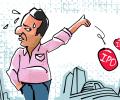
India's equity markets may have expanded rapidly, but initial public offerings (IPOs) are increasingly becoming exit vehicles for early investors rather than as engines for raising long-term capital, a shift that undermines the spirit of public markets, Chief Economic Advisor V Anantha Nageswaran warned on Monday at a CII event.

The National Stock Exchange (NSE) on Wednesday created a world record with processing 1,971 crore transactions in a single day, its MD and CEO Ashishkumar Chauhan said. "@nseindia handled the highest ever - world record - number of transactions in a single day today on June 5, 2024, in a 6 hours and 15 minutes (915 am to 330 pm) single trading day - 1,971 crore (19.71 billion) orders per day. 28.55 crore (280.55 million) trades per day," Chauhan said on X platform (formerly Twitter).

Most market analysts are expecting the momentum to shift towards 'quality' and 'growth' stocks in 2024 after the outperformance of 'value' stocks over the past three years. 'Value' stocks are generally well-established companies with steady profits that are trading at a discount to what they are intrinsically worth. Companies in sectors such as commodities, industrials, commercial vehicles and public sector units (PSUs) fall in this bracket.
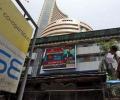
The stock exchange BSE has called off the merger of its unit at the Gujarat International Finance Tec-City International Financial Services Centre (GIFT IFSC), India International Exchange (India INX), with NSE International Exchange (NSE IX), a similar unit floated by rival National Stock Exchange (NSE), according to sources familiar with the development. BSE and NSE had been in discussions for the merger for over a year, but it has yielded no results, they said.

Among the Sensex firms, Tech Mahindra, Tata Motors, Infosys, Wipro, Tata Steel, Tata Consultancy Services, Reliance Industries and Axis Bank were the major gainers. Bajaj Finance, IndusInd Bank and Power Grid were the laggards.

The National Stock Exchange (NSE) on Friday warned investors not to fall prey to investment plans with guaranteed returns offered by Suraj Mourya associated with "Aimers Trader". The exchange pointed out that these entities are not registered either as a member or authorised person of any registered member of the NSE. The cautionary statement comes after the NSE noticed that Suraj Mourya associated with Aimers Trader was offering to handle trading accounts of investors by asking them to share their user identification (user ID) and password.

Among the Sensex shares, Infosys rose the most by 1.37 per cent, followed by Larsen & Toubro (0.90 per cent), and Wipro (0.83 per cent). HDFC Bank, ICICI Bank, Reliance Industries, ITC, TCS, Kotak Bank, Asian Paints and Titan were among the lead gainers.
During the quarter ended December, foreign investors aggressively raised their shareholding in Indian information technology (IT) companies, especially mid- and small-sized ones, according to shareholding data.
The National Stock Exchange (NSE) has asked investors not to put their money in any scheme promising assured returns from investments in the stock market. The advisory comes after the bourse found that two entities -- Pruthvi Consultancy Services and KBK Advisory -- were offering such schemes and assuring guaranteed returns on stock market investments.

The National Stock Exchange (NSE) on Tuesday said it has halved the lot size for trading derivatives contracts for the Nifty 50 index to 25 and also reduced the lot sizes of the Nifty Financial Services and Nifty Midcap indices as part of its periodic revision. "All contracts, i.e. weekly, monthly, quarterly, and half-yearly expires available for trading from the trade date of April 26, 2024, onwards will be with the revised market lot size," the NSE said, referring to applicability of the change for Nifty 50. The lot size in the derivatives segment refers to the fixed number of shares in a unit or group for which contracts are traded.

Widening the ambit of its probe, the police has sought information from the National Stock Exchange (NSE) about investments made by the alleged mastermind of the Citibank fraud, Shivraj Puri, even as it tried to locate his iPad, which may contain crucial data.

Nearly 90 per cent of the stocks comprising the National Stock Exchange Nifty 500 Index and 49 of the 50 stocks that make up the Nifty50 are trading above their respective 200-day moving averages (DMAs). The 200-DMA is considered one of the most relevant trend indicators by investors and traders. They believe that stocks and indices trading above this key level exhibit strength and are likely to rally, while those trading below this level are viewed as bearish, with the stock/index expected to see a selloff.

Actively managed mutual fund (MF) schemes had been at the receiving end over the past few years for their inability to beat their benchmarks. However, the slump in shares of Adani Group companies - two of which are part of the benchmark National Stock Exchange Nifty50 index - have helped them improve their performance vis--vis exchange-traded funds (ETFs) or index funds.
The Securities and Exchange Board of India (Sebi) is mulling changes to the 'fit & proper' criteria for market infrastructure institutions (MIIs), such as stock exchanges, in a bid to segregate the role of an individual from the entity, said sources. Under the current framework, wrongdoing by senior personnel could lead to a debarment of the MIIs such as stock exchanges, depository participants and clearing members-with quite a few such instances in the past. Additionally, Sebi is also mulling to introduce a clause through which any order passed against an MII will not affect their operations, unless it is specifically mentioned so in the order.

Shares of One97 Communications (OCL), which provides financial services under the brand 'Paytm', and has a banking arm Paytm Payments Bank (PPBL), hit the 5 per cent upper circuit at Rs 428.10 on the National Stock Exchange (NSE) in Monday's (February 26) intraday trade. The up move in the stock on Monday came after the Reserve Bank of India (RBI) asked the National Payments Corporation of India (NPCI), in post stock market hours, to look into the possibility of migrating PPBL customers, using the UPI handle '@paytm', to four-to-five other banks.
It was a black Friday for NDTV's stocks. The company's scrip dropped by 11 per cent on the bourses reacting to the news of its managing editor Rajdeep Sardesai and chief financial officer Sameer Manchanda quitting the company.

Leading bourses BSE and NSE will put the securities of NDTV, an Adani Group company, under the short-term ASM framework from Tuesday. The parameters for shortlisting securities under ASM include high-low variation, client concentration, number of price band hits, close-to-close price variation and price-earning ratio. New Delhi Television Ltd (NDTV) is shortlisted in the short-term Additional Surveillance Measure (ASM) framework Stage-I effective from May 30, the National Stock Exchange (NSE) and BSE said in two separate circulars on Monday.

After a strong run in the midcap and smallcap indices, which surged 46 per cent and 43 per cent, respectively, on the National Stock Exchange (NSE) during Samvat 2080, analysts suggest that the rally in these segments may pause to catch its breath in Samvat 2081.

In total, BSE would shift as many as 40 securities to the trade-for-trade category or 'T' Group while NSE would transfer 18 scrips to the segment on its platform, as per separate notices issued by both the bourses.

The Jane Street-Sebi saga is more than a legal dispute -- it's a litmus test for India's ambitions as a global financial hub.

Sebi has asked stock exchanges and other market participants to remain watchful of funds and entities with Iranian links, as the global inter-governmental agency FATF continues to classify Iran as one of the 'high-risk and non-cooperative jurisdictions' with respect to money laundering and terror financing activities.
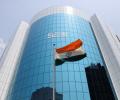
The Securities and Exchange Board of India's (Sebi's) six-step plan to curb retail participation in speculative index derivatives may lead to a substantial drop in volumes - potentially by 30-40 per cent. These measures aim to reduce excessive speculation in the futures and options (F&O) segment, where daily turnover often exceeds Rs 500 trillion and retail investors end up on the losing side of the trade more often. Sebi has decided to increase the contract size from Rs 5 lakh to Rs 15 lakh, raising margin requirements and mandating the upfront collection of option premiums from buyers.

The Delhi high court on Wednesday granted bail to former National Stock Exchange (NSE) head Chitra Ramkrishna and ex group operating officer Anand Subramanian in the co-location scam case being probed by the CBI. Justice Sudhir Kumar Jain said he was granting "statutory bail" to the two former officials of the NSE. A detailed copy of the order is awaited.

Hyderabad police on Thursday arrested two senior executives of scam-hit Karvy Stock Broking Pvt Ltd for allegedly involving in diverting funds raised from banks by pledging clients' securities as collaterals. According to a police press release, Rajiv Ranjan Singh, chief executive officer and G. Krishna Hari chief financial officer of Karvy were arrested basing on a complaint by IndusInd bank.

The Union Budget 2025-26, while promising a new framework for smoother mergers and acquisitions (M&As), has plugged a major loophole on carry-forward losses for a total of eight assessment years between amalgamating company and amalgamated company from the date of loss instead of date of the merger. For all mergers effected on or after April 1, 2025, the losses can be carried forward only for the residuary period (counting from the date of loss).
The biggest gainer, Lupin, saw its market value appreciate nearly seven-fold.

Five firms, including ACC Ltd, HDFC Asset Management Company and FSN E-Commerce Ventures that runs Nykaa, will be dropped from Nifty Next 50 index from September 29. NSE Indices Ltd, an arm of the National Stock Exchange, on Thursday said that Indus Towers and Page Industries will also be dropped from the index. Punjab National Bank, Trent, Sriram Finance, TVS Motor Company, and Zydus Lifesciences will be included in the Nifty Next 50 index, NSE Indices said in a statement.

The upper market capitalisation (mcap) threshold for midcap and smallcap stocks in the mutual fund (MF) industry's revised list of stocks, to be announced this month, is set to see the second-highest yearly rise in the past five years. The list was first announced in 2018, and it has been revised every six months since then. According to estimates released by Nuvama Alternative & Quantitative Research, the upper threshold for the midcap and smallcap universes could come in at Rs 66,700 crore and Rs 21,900 crore in the next list.

While a little more than 140 penny stocks have doubled in value, 555 have given negative returns in the past year. Of these, 84 shed more than half their value.
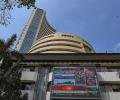
According to data from BSE, the 4,357 companies available for trade had a combined mcap of around Rs 416 trillion on Tuesday against India's GDP at current prices of Rs 296.6 trillion in FY24.

'As we navigate uncertain waters, a conservative approach to largecap investing could provide a strategic advantage.'
The Nifty Options would add to SGX's suite of Asian equity derivatives, which include SGX S&P CNX Nifty futures, the dominant Indian product for international participants.

Nitish Kumar is poised to lead the NDA government in Bihar, with key political developments unfolding ahead of the swearing-in ceremony. The article covers the election of the NDA leader, cabinet allocation discussions, and reactions to the election results, including Prashant Kishor's claims and the family feud within Lalu Prasad's family.

Capital markets regulator Sebi on Thursday sent a notice to NSE's former chief Ravi Narain, asking him to pay Rs 2.06 crore in a case related to governance lapses at the stock exchange, and warned of arrest and attachment of assets and bank accounts if he fails to make the payment within 15 days. The notice came after Narain failed to pay the fine imposed on him by SEBI (Securities and Exchange Board of India). The regulator, through an order passed on February 11, levied a fine of Rs 2 crore on Narain in the matter of governance issues over the appointment of the chief strategic officer at the stock exchange in 2013.

'Investors need to be stock specific and should not rush to buy stocks at the current levels.'
